
 English
 Tiếng Việt

VIETNAMESE RICE UNDER “DUAL PRESSURE”: INDIA OVERSUPPLY, PHILIPPINES HALTS IMPORTS
29 Dec 2025

Vietnamese rice is facing strong competitive pressure as Indian rice oversupply and the Philippines’ temporary import suspension significantly impact Vietnam’s rice exports.
Vietnamese rice, one of the world’s three leading rice exporters, is currently facing growing competitive pressure as two major factors take effect simultaneously: India increasing rice supply and the Philippines temporarily suspending rice imports from traditional markets.
India fuels global rice oversupply
Global rice prices have declined recently as many major producing countries enjoy good harvests. Among them, India - the world’s most populous country - has emerged as a key trigger of global rice oversupply.
Export rice prices, such as 5% broken rice from India and Thailand, have dropped sharply compared to previous years, leading to a downward trend in the average export price of Vietnamese rice in the international market.
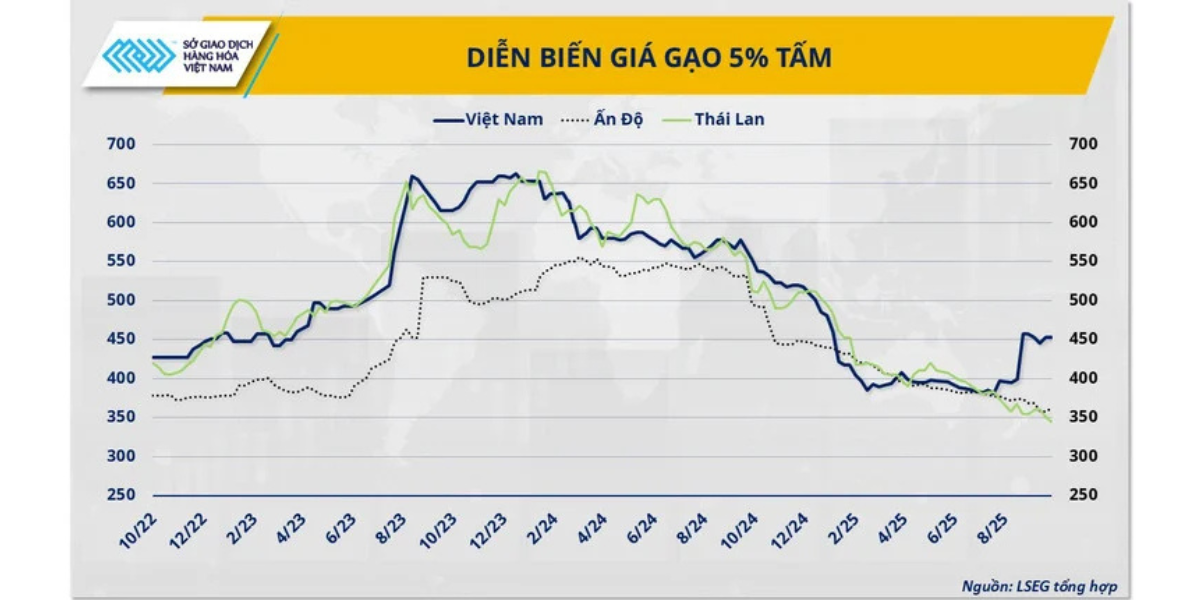
Price movements of Vietnam’s 5% broken rice (Source: LESG compilation).
Vietnam’s rice export situation
According to the International Grains Council, global rice production in the 2025-2026 crop year is projected to reach a record 727 million tons, reflecting a strong increase in supply and causing global rice oversupply to exceed demand.
In this context, Vietnam’s rice export prices have fallen by more than 20% year-on-year, indicating that Vietnamese rice is facing direct competition from lower-priced supplies, particularly from India and other exporting countries.
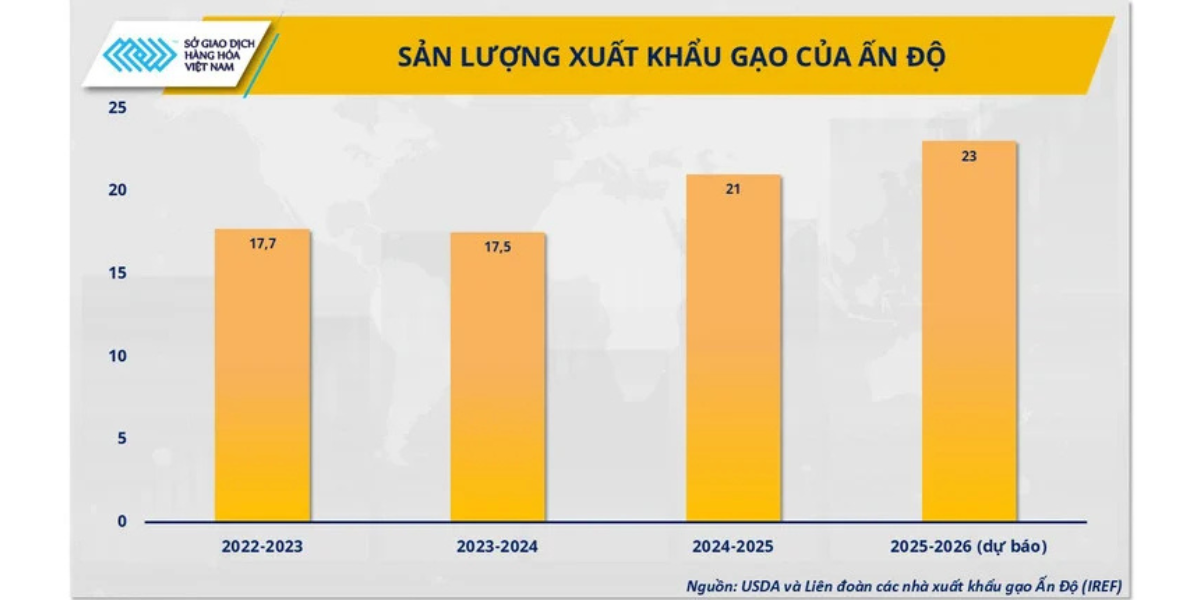
India’s rice export volume (Source: USDA and the Indian Rice Exporters Federation – IREF).
Philippines temporarily suspends rice imports
Meanwhile, the Philippines - the world’s largest rice importer and Vietnam’s key export market - has temporarily suspended rice imports over the past two months in an effort to protect its domestic market.
The Philippines’ suspension of rice imports has placed significant pressure on Vietnamese rice, as this market has accounted for approximately 40–45% of Vietnam’s total rice export value in recent years. As a result, many orders have been delayed, while inventories have increased due to the suspension.
Notably, the Philippines’ rice import suspension has been extended until the end of 2025 to safeguard farmers during the harvest season, raising concerns among Vietnamese businesses about rising inventories and mounting downward price pressure.
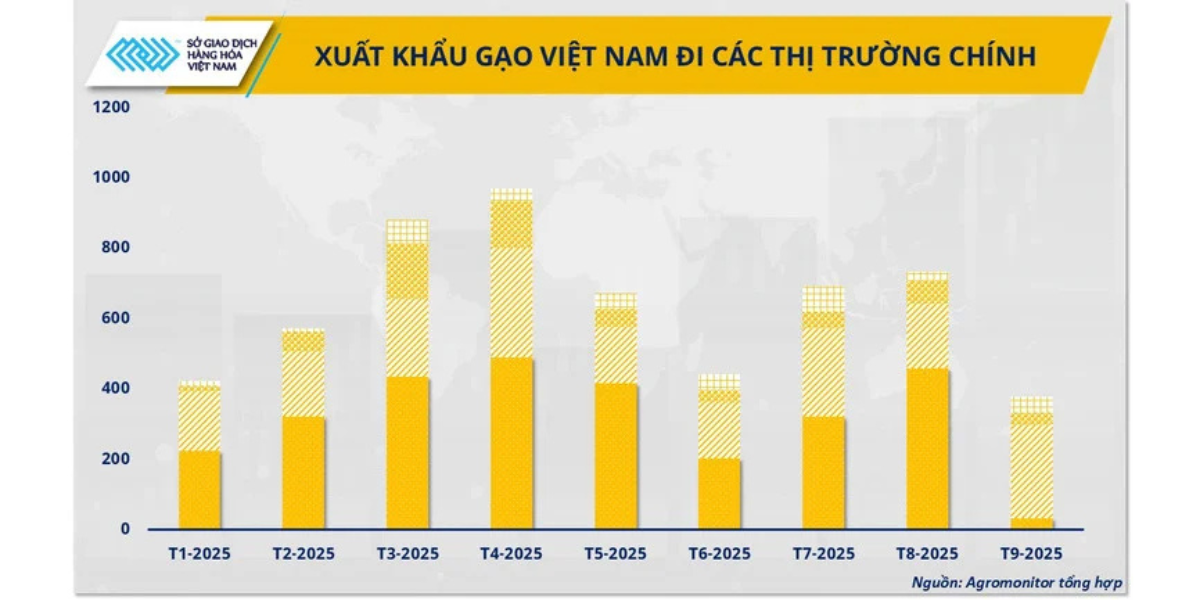
Vietnam’s rice exports to major markets (Source: Agromonitor compilation).
“Dual pressure” and new directions
The combination of global rice oversupply from India and the Philippines’ import suspension has created a “dual pressure” on the Vietnamese rice market, driving export prices down and posing challenges to maintaining market share in key destinations.
To address these challenges, Vietnamese enterprises and authorities are considering expanding exports to other regions such as Africa and the Middle East, while also increasing value-added rice products to reduce reliance on a single market.
Views
637