
 English
 Tiếng Việt

LAM DONG: COOPERATIVE BOOSTS DEVELOPMENT OF YELLOW-SKIN DRAGON FRUIT
06 Apr 2026
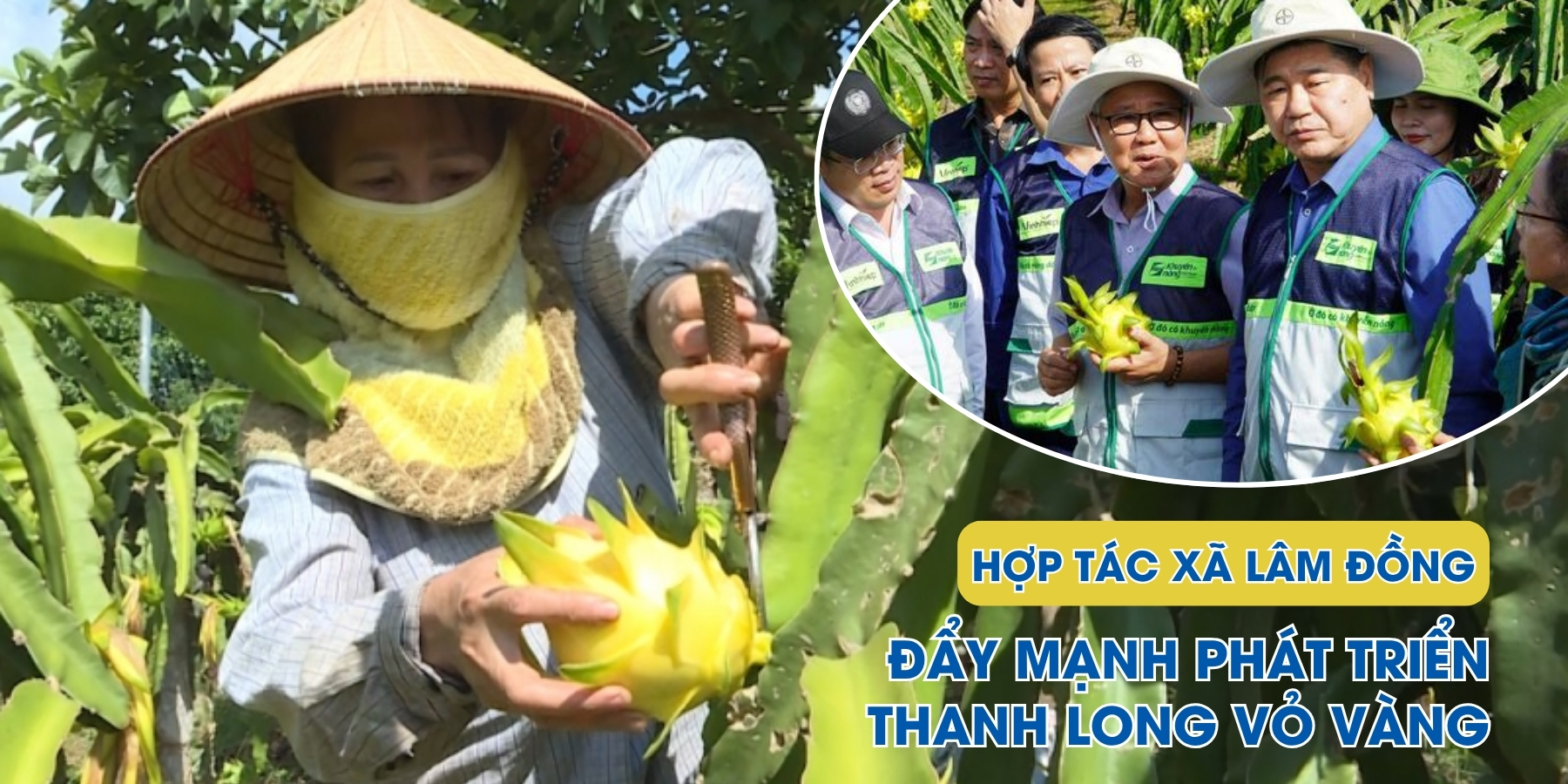
What drives Lam Dong dragon fruit cooperative to choose yellow-skin, white-flesh dragon fruit as its new direction?
Facing the need to enhance agricultural value, Trung Binh Organic Dragon Fruit Cooperative in Lam Dong has adopted a new direction by focusing on developing yellow-skin, white-flesh dragon fruit, while organizing production based on orders to meet export market demand.
Investment in new varieties with high technical requirements
According to a representative of the Lam Dong Dragon Fruit Cooperative, the unit has introduced the cultivation of yellow-skin, white-flesh dragon fruit originating from Thailand. This variety requires advanced techniques, has a long establishment period, and involves significant investment costs.
Specifically, the total investment for developing one hectare can exceed VND 1 billion. It takes about two years for the plants to produce stable yields. During cultivation, farmers must carry out manual pollination at night and strictly control pests and diseases.
Despite the stringent requirements, this variety can achieve yields of approximately 50–60 tons per hectare per year, comparable to traditional varieties, while delivering higher economic value.
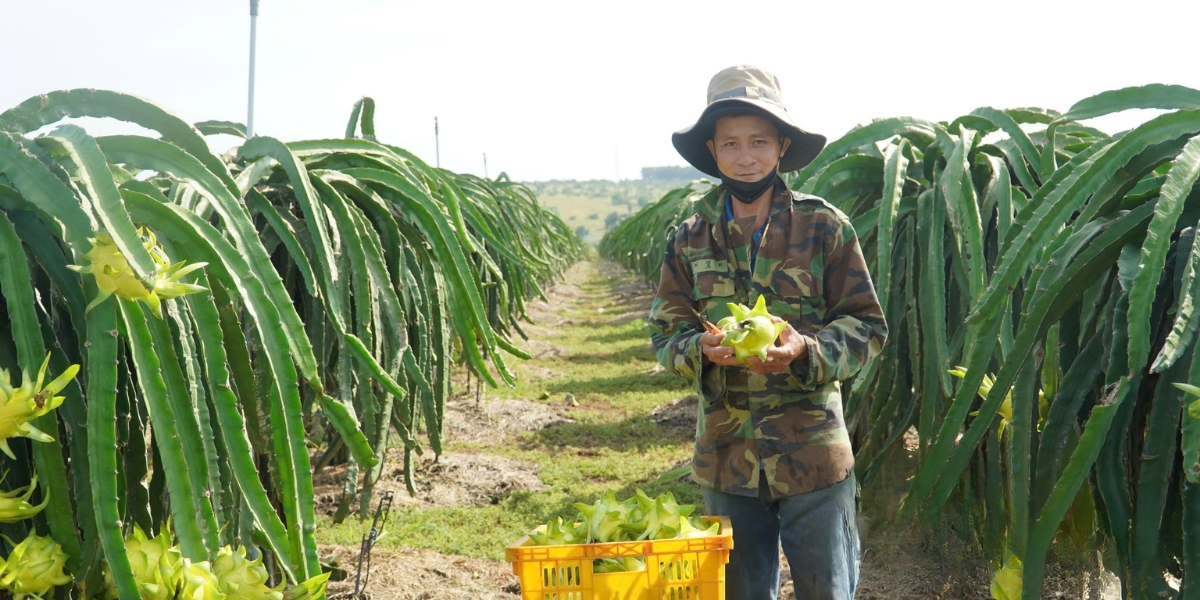
Trung Binh Cooperative manages around 400 hectares of dragon fruit, of which over 90% is yellow-skin, white-flesh dragon fruit. Photo: Internet
Production based on orders, targeting exports
One notable aspect of the Lam Dong Dragon Fruit Cooperative is its market-oriented production model. Instead of expanding cultivation spontaneously, the cooperative proactively receives orders 2–3 months in advance to develop appropriate production plans.
As a result, product output, quality, and delivery timing are well ensured. Currently, about 85-90% of the cooperative’s output is exported to markets such as Thailand, China, and Russia.
The average price of yellow-skin, white-flesh dragon fruit remains at around VND 40,000 per kilogram, higher than many common dragon fruit varieties on the market.
Gradually enhancing agricultural value
To meet export requirements, the Lam Dong Dragon Fruit Cooperative focuses on applying safe production standards, including GlobalGAP certification, along with product traceability.
The development of yellow-skin, white-flesh dragon fruit not only helps diversify products but also contributes to increasing value per unit of cultivated land.
However, the implementation still faces certain challenges, including high investment costs, complex technical requirements, and pressure to maintain stable market demand.
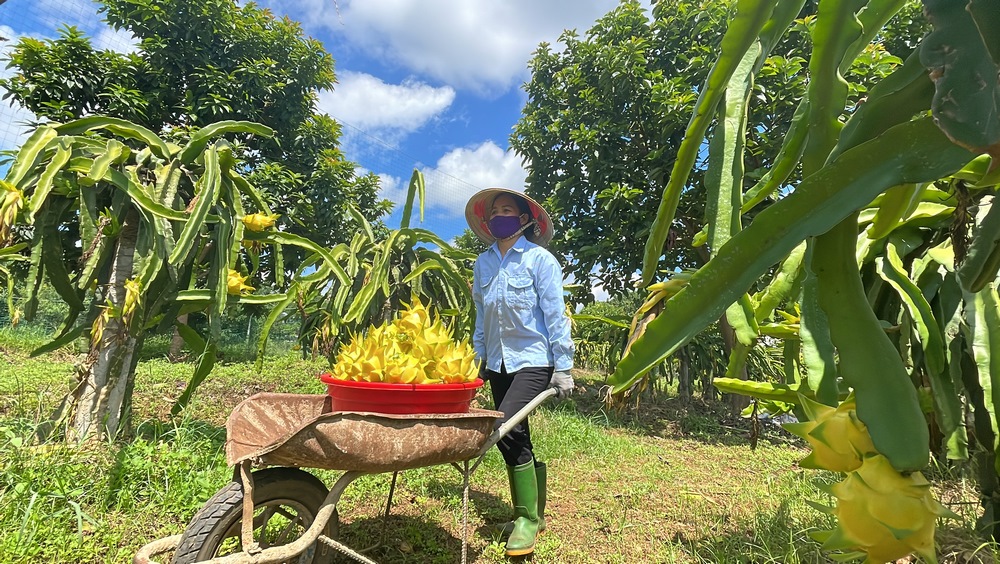
Harvesting yellow-skin, white-flesh dragon fruit. Photo: Internet
A new direction for agricultural production
In practice, shifting to high-quality crop varieties combined with order-based production is considered an appropriate direction in the context of increasingly demanding markets.
This model is expected to contribute to sustainable agricultural development, enhance added value, and improve the competitiveness of Vietnamese agricultural products in the international market.
Views
270