
 English
 Tiếng Việt

[NEWS] DAK LAK SUGARCANE AND DURIAN FACE MULTIPLE CHALLENGES
28 Aug 2026
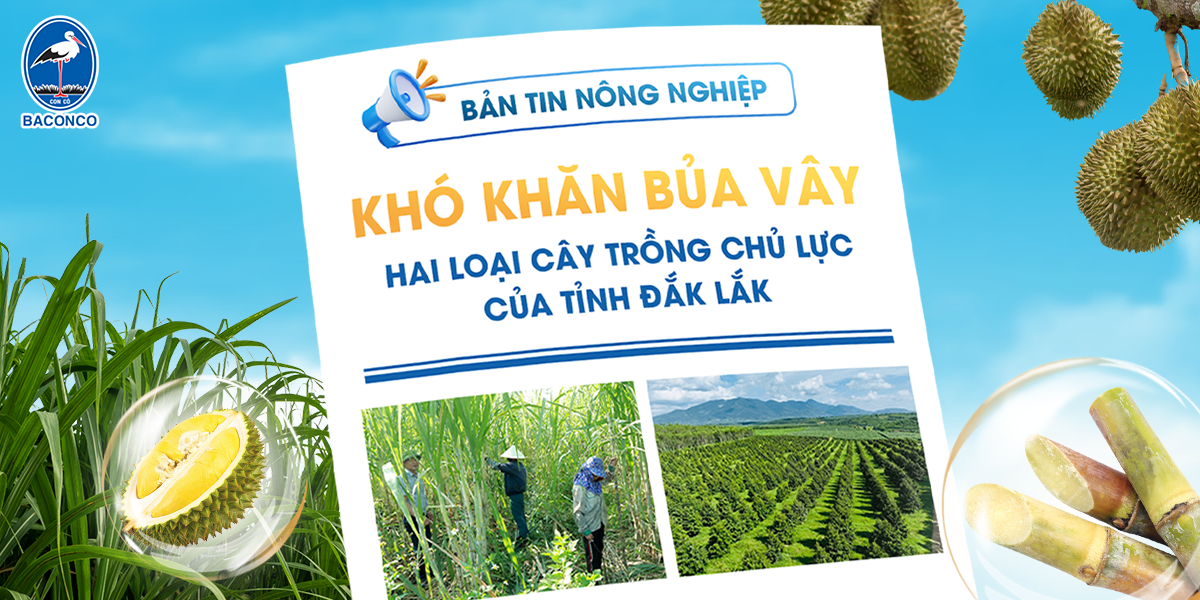
Dak Lak sugarcane and durian face challenges from smuggled sugar, while durian exports face growing area code and testing hurdles.
Dak Lak sugarcane and durian face growing market pressure
Dak Lak sugarcane and durian are two major agricultural commodities that contribute significantly to local production and the livelihoods of many farming households.
However, both sectors are facing notable challenges. While the Dak Lak sugar industry is under pressure from smuggled sugar, falling prices, and high inventories, durian exports are facing difficulties related to growing area codes and testing capacity.
Dak Lak sugar industry faces pressure from smuggled sugar
In the 2024–2025 crop year, Dak Lak had nearly 45,000 hectares of sugarcane, producing more than 2.9 million tonnes. Despite this scale, the Dak Lak sugar industry is facing difficulties in consumption as smuggled sugar and trade fraud continue to put pressure on the domestic market.
Key challenges include:
- High sugar inventories.
- Falling domestic sugar prices, affecting sugarcane purchasing prices.
- Rising production and harvesting labor costs.
- Labor shortages slowing harvesting and raw material procurement.
In response, local authorities and businesses have continued to call for tighter control of smuggled sugar and trade fraud, along with measures to support domestic consumption.
These difficulties show that Dak Lak sugarcane and durian are being affected not only by production conditions but also by broader market factors.
Durian exports face difficulties related to growing area codes
Alongside sugarcane, durian is another major agricultural commodity in Dak Lak. In 2025, the province had nearly 45,000 hectares of durian, with estimated output reaching 390,000 tonnes and export turnover of approximately USD 1.1 billion.
However, durian exports are facing challenges as cultivation areas have expanded rapidly while management systems have struggled to keep pace.
Of the province’s total durian area, only more than 7,400 hectares have been granted growing area codes, accounting for around 28% of the productive area. This limits the ability of many farming areas to participate directly in official durian exports.
Improving growing area codes, traceability, and packing facility codes is therefore becoming increasingly important for meeting the requirements of importing markets.
Durian testing remains a key export bottleneck
In addition to growing area management, durian testing for indicators such as Cadmium (Cd) and Auramine O has also become a major concern for local authorities and businesses.
Limited local testing capacity can extend waiting times for results and affect export schedules. Dak Lak is therefore promoting the development of additional qualified laboratories to support durian testing and other major agricultural products.
Improved testing capacity, combined with stronger management of growing areas, is expected to help reduce bottlenecks across the export supply chain.
Dak Lak sugarcane and durian need more stable production and market access
Current challenges show that Dak Lak sugarcane and durian depend not only on productivity but also on market conditions, export standards, and supply chain management.
For sugarcane, stronger market control and support for domestic consumption remain important. For durian, improving growing area management, traceability, and durian testing will be essential for maintaining export opportunities.
For farmers, applying suitable cultivation practices, regularly monitoring crop conditions, and maintaining agricultural product quality can help Dak Lak sugarcane and durian adapt more effectively to changing market requirements.
Conclusion
Dak Lak sugarcane and durian are facing significant challenges as sugarcane struggles with market pressure while durian encounters difficulties related to growing area codes and testing. Addressing these bottlenecks and improving production quality will be important foundations for more stable development.
Source: https://baodautu.vn/kho-khan-bua-vay-hai-loai-cay-trong-chu-luc-cua-tinh-dak-lak-d638555.html
Views
0